
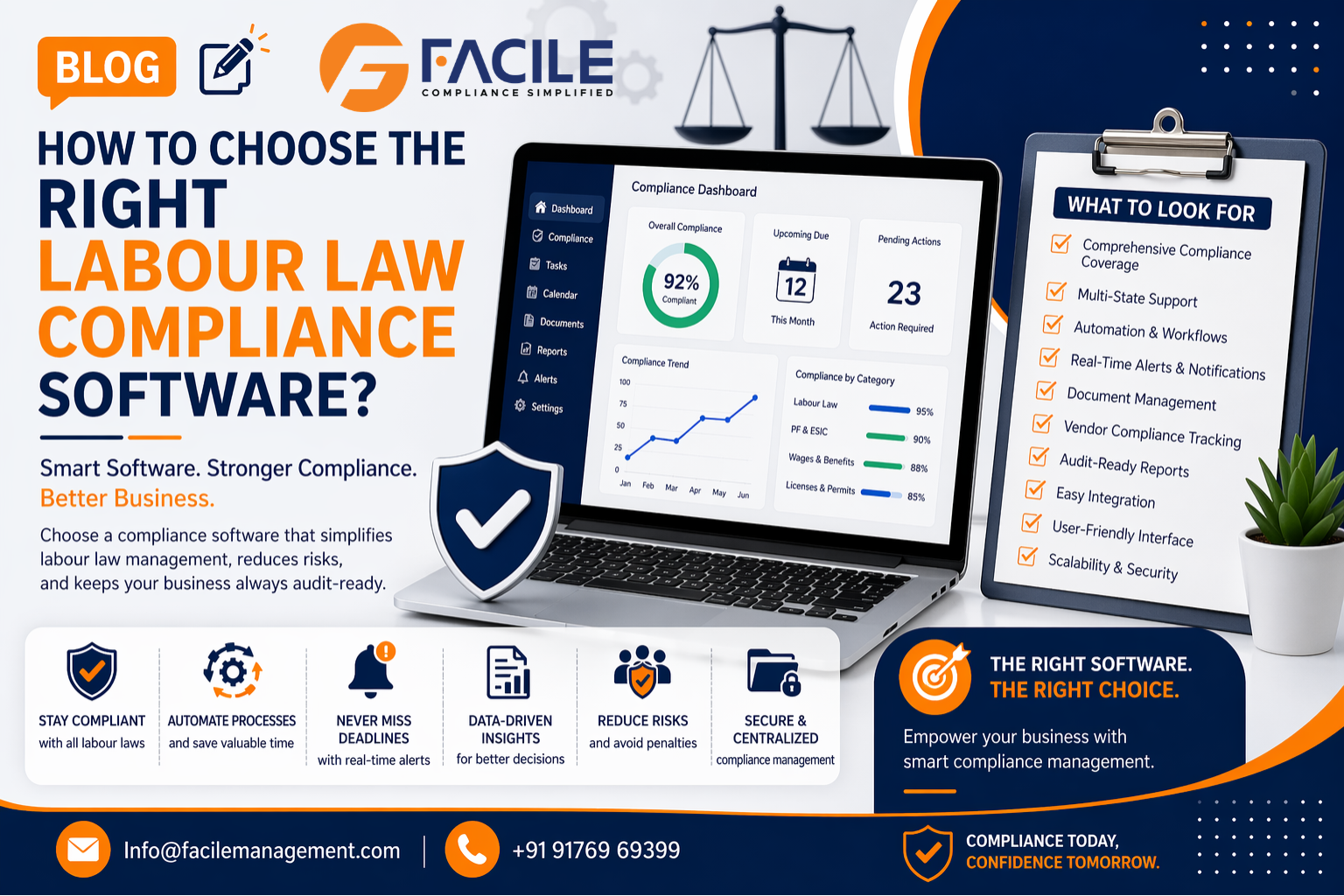
How to Choose the Right Labour Law Compliance Software?

A Complete Guide to Selecting the Best Compliance Solution for Your Business in 2026


Introduction: Why Choosing the Right Compliance Software Matters

Labour law compliance has become increasingly complex with evolving regulations, multi-state operations, and stricter enforcement in 2026. Businesses can no longer rely on spreadsheets or manual tracking systems to manage compliance effectively.

Choosing the right labour law compliance software is not just a technical decision—it’s a strategic one. The right solution can:

  • Reduce compliance risks
  • Improve operational efficiency
  • Ensure timely filings
  • Strengthen audit readiness

On the other hand, the wrong choice can lead to inefficiencies, missed deadlines, and compliance failures.

Organizations today are turning to expert-backed platforms like Facile Management Services to simplify and automate compliance processes.


What is Labour Law Compliance Software?

Labour law compliance software is a digital platform that helps businesses:

  • Manage statutory compliance requirements
  • Automate compliance processes
  • Track deadlines and filings
  • Maintain compliance records

In Simple Terms:

It is a centralized system that ensures your business stays compliant with labour laws efficiently and accurately.


Why Businesses Need Compliance Software in 2026

1. Increasing Regulatory Complexity

Businesses must comply with multiple laws such as:

  • Minimum Wages
  • PF & ESIC
  • Shops & Establishment
  • Contract Labour

2. Multi-State Operations

Different states have different rules, making compliance management difficult.


3. Risk of Penalties

Non-compliance can result in:

  • Heavy fines
  • Legal actions
  • Business disruptions

4. Need for Automation

Manual processes are:

  • Time-consuming
  • Error-prone
  • Hard to scale

Key Features to Look for in Labour Law Compliance Software

1. Centralized Dashboard

A good system should provide:

  • Real-time compliance status
  • Pending vs completed tasks
  • Compliance scores

2. Automation Capabilities

Look for:

  • Automated register generation
  • Workflow automation
  • Auto reminders

3. Multi-State Compliance Support

The software should handle:

  • State-specific rules
  • Different formats and filings

4. Real-Time Alerts & Notifications

Ensure:

  • Due date reminders
  • Compliance alerts
  • Escalation notifications

5. Document Management System

The software should:

  • Store statutory records securely
  • Enable easy retrieval
  • Maintain audit trails

6. Vendor Compliance Tracking

Essential for:

  • Monitoring third-party compliance
  • Reducing vendor-related risks

7. Audit Readiness

Look for:

  • Audit reports
  • Historical data storage
  • Compliance logs

8. Integration Capabilities

The system should integrate with:

  • HRMS
  • Payroll systems
  • Accounting software

9. Scalability

Ensure the software can grow with your business.


10. User-Friendly Interface

Easy to use for:

  • HR teams
  • Compliance officers
  • Management

Steps to Choose the Right Compliance Software

Step 1: Identify Your Requirements

  • Number of employees
  • Locations
  • Applicable laws

Step 2: Evaluate Features

Match software features with your needs.


Step 3: Check Compliance Coverage

Ensure it covers:

  • All relevant labour laws
  • State-specific regulations

Step 4: Assess Automation Level

Higher automation = better efficiency.


Step 5: Review Vendor Expertise

Choose providers with:

  • Industry experience
  • Compliance knowledge

Step 6: Request Demo

Test the software before finalizing.


Step 7: Compare Pricing

Evaluate cost vs value.


Common Mistakes to Avoid

  • Choosing software without multi-state support
  • Ignoring vendor compliance features
  • Selecting overly complex systems
  • Not checking integration capabilities
  • Focusing only on cost instead of value

Benefits of Choosing the Right Compliance Software

✔ Improved Efficiency

Automates repetitive tasks.

✔ Reduced Risk

Ensures timely compliance.

✔ Cost Savings

Reduces manpower requirements.

✔ Better Visibility

Provides real-time insights.

✔ Audit Readiness

Maintains proper documentation.


How Technology is Transforming Compliance

Modern compliance software uses:

🔹 Automation

Reduces manual work.

🔹 Cloud Technology

Enables remote access.

🔹 Data Analytics

Provides insights into compliance trends.

🔹 AI-Based Monitoring

Predicts compliance risks.


Why Choose Facile for Compliance Software

As referenced from
👉 https://www.facilemanagement.com/labour-law-compliance-servicest

Facile Management Services offers advanced labour law compliance solutions with:

✔ End-to-End Compliance Management

From tracking to reporting.

✔ Automated Register Preparation

Generate statutory records instantly.

✔ Real-Time Monitoring

Track compliance status continuously.

✔ Vendor Compliance Management

Ensure third-party compliance.

✔ Audit Support

Stay prepared for inspections.


Future Trends in Compliance Software

🔹 AI-Driven Compliance

Predict and prevent issues.

🔹 Integrated Platforms

Connect compliance with HR and payroll.

🔹 Real-Time Reporting

Instant compliance insights.

🔹 Mobile Accessibility

Access compliance data anytime, anywhere.


Checklist for Selecting Compliance Software

✔ Covers all labour laws
✔ Supports multi-state operations
✔ Offers automation features
✔ Provides real-time alerts
✔ Includes vendor compliance tracking
✔ Ensures data security
✔ Offers easy integration


Conclusion: Make the Right Choice for Long-Term Success

Choosing the right labour law compliance software is crucial for business success in 2026.

With the right solution, businesses can:

  • Simplify compliance processes
  • Reduce risks
  • Improve efficiency
  • Stay audit-ready

Investing in the right compliance software is an investment in your business’s future.


FAQs (Frequently Asked Questions)

1. What is labour law compliance software?

It is a system that helps businesses manage and automate compliance with labour laws.


2. Why is compliance software important?

It reduces risks, improves efficiency, and ensures timely compliance.


3. What features should I look for?

Automation, dashboard, alerts, document management, and vendor compliance tracking.


4. Can small businesses use compliance software?

Yes, it is scalable for all business sizes.


5. How does automation help?

It reduces errors and saves time.


6. What is multi-state compliance?

Managing compliance across different states with varying laws.


7. Is integration important?

Yes, it ensures seamless data flow with other systems.


8. What is vendor compliance tracking?

Monitoring third-party compliance with regulations.


9. How does compliance software improve audits?

It maintains organized records and reports.


10. Is cloud-based software better?

Yes, it offers scalability and remote access.


11. How often should compliance be monitored?

Continuously using real-time systems.


12. What are compliance alerts?

Notifications for deadlines and updates.


13. Can compliance software reduce costs?

Yes, by reducing manual work and errors.


14. How to choose the best vendor?

Check experience, features, and customer reviews.


15. Where can I find compliance software solutions?

You can explore solutions from Facile Management Services.

About the Author

Leave a Reply

Your email address will not be published. Required fields are marked *

You may also like these