
A Complete Guide to Building Smarter, Automated, and Risk-Free Compliance
In today’s regulatory landscape, businesses are expected to comply with a wide range of laws, standards, and internal policies. From labor laws and statutory filings to data protection and vendor obligations, compliance has become increasingly complex and critical.
Managing compliance manually—through spreadsheets, emails, and disconnected tools—is no longer sustainable. Errors, missed deadlines, and lack of visibility can lead to serious consequences.
This is where a Compliance Management System (CMS) becomes essential.
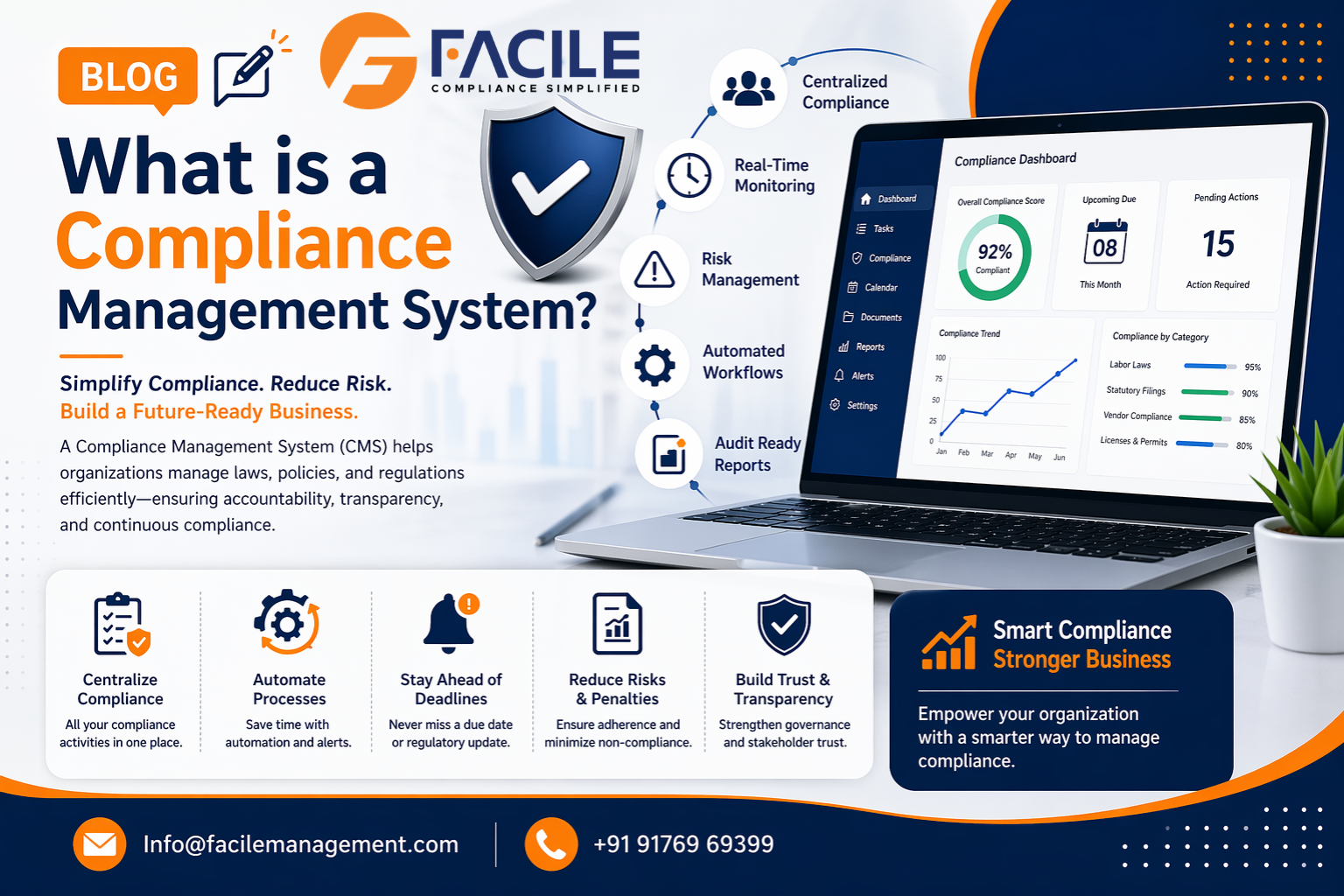
A Compliance Management System is a structured framework—often powered by technology—that helps organizations manage, monitor, and enforce compliance efficiently.
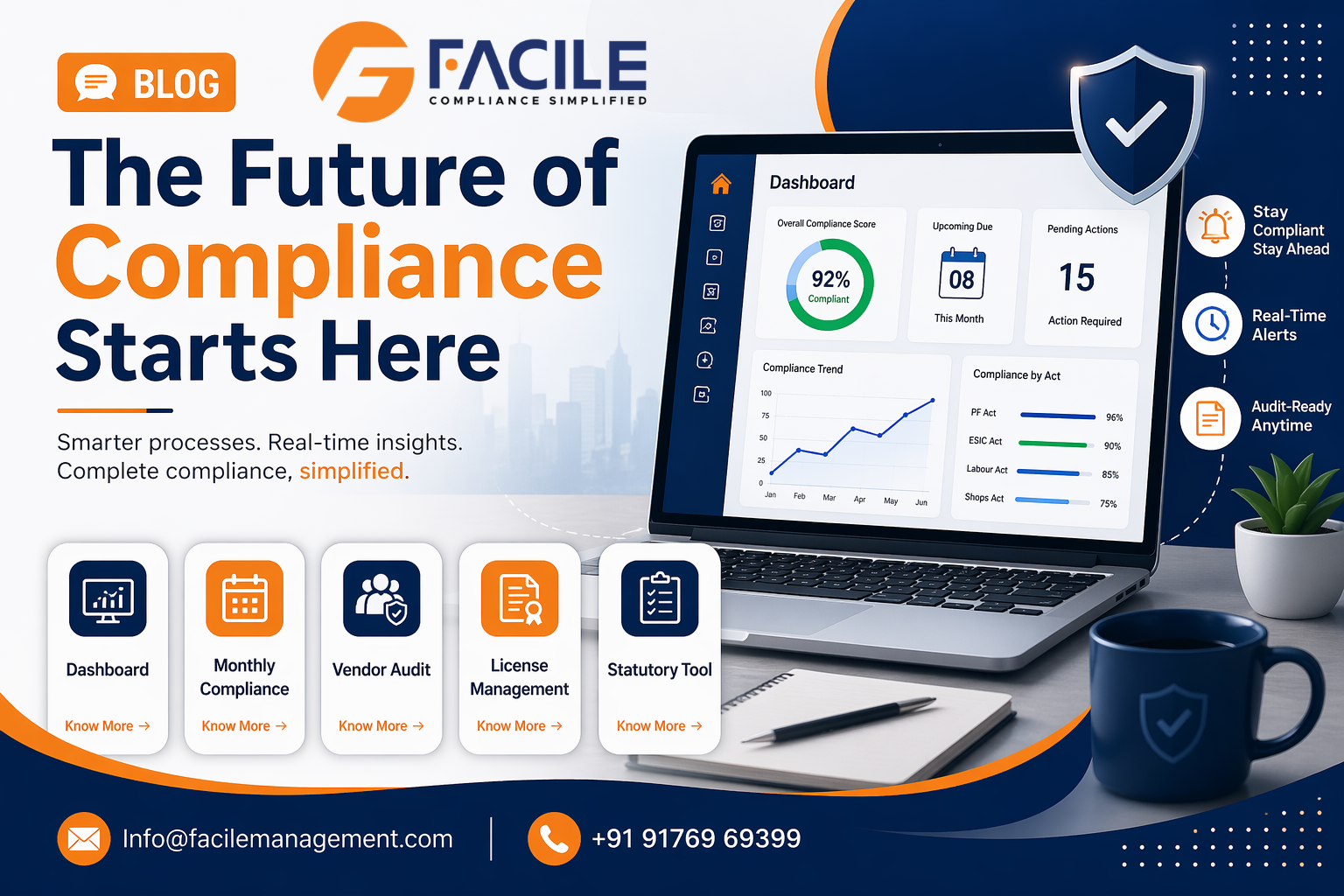
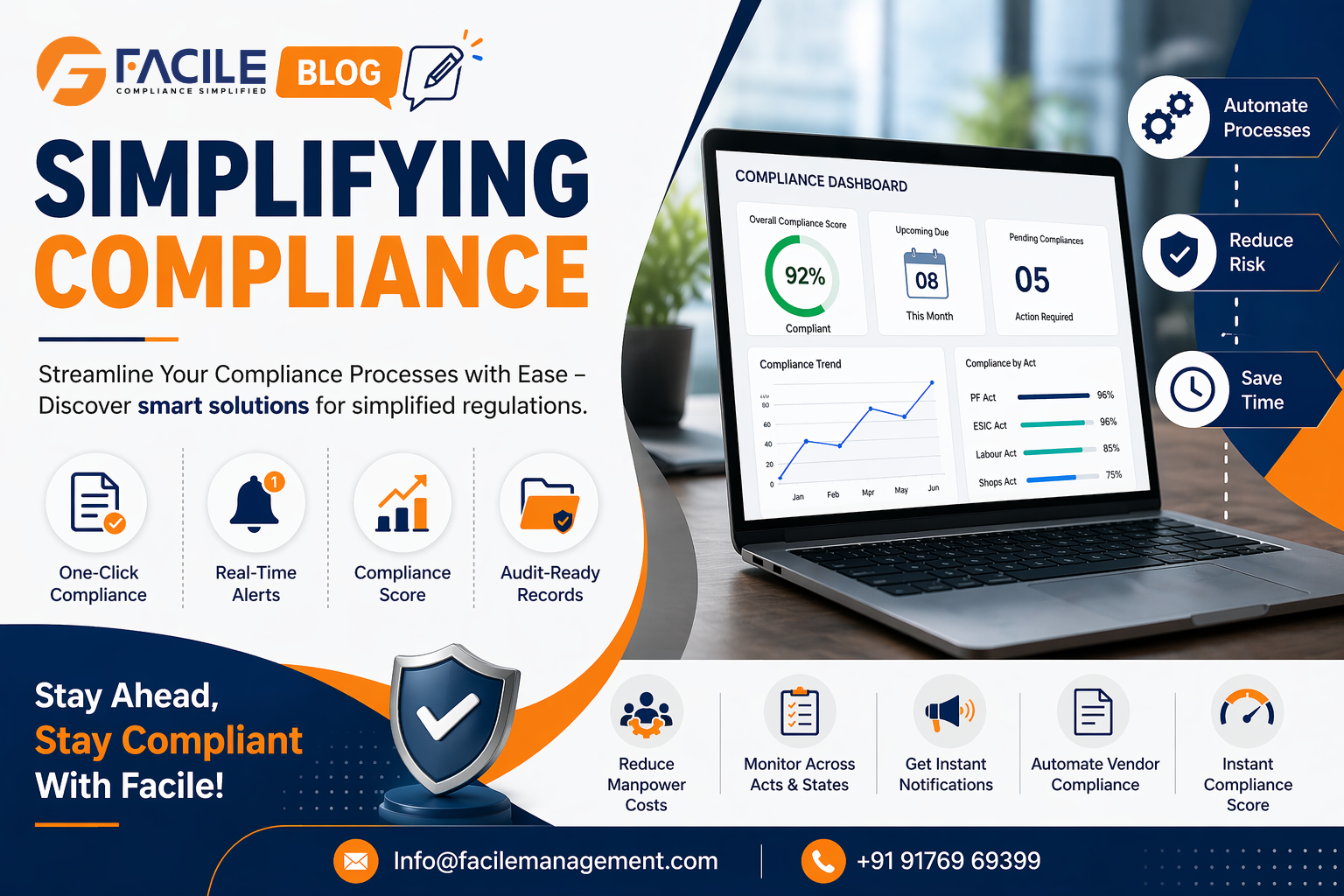
Leading providers like Facile Management Services offer advanced solutions that simplify compliance through automation, real-time monitoring, and centralized control.
A Compliance Management System (CMS) is a combination of:
designed to ensure that an organization adheres to legal, regulatory, and internal requirements.
It is a centralized system that helps businesses stay compliant, reduce risks, and streamline operations.
A CMS is built to achieve the following:
Adhere to all applicable laws and regulations.
Identify and mitigate compliance risks proactively.
Automate repetitive tasks and reduce manual workload.
Provide real-time visibility into compliance status.
Maintain accurate records for inspections and audits.
Defines internal rules and guidelines.
Keeps track of changing laws and regulations.
Identifies potential compliance risks.
Automates compliance activities.
Stores and manages compliance records.
Ensures deadlines are never missed.
Provides insights into compliance performance.
A Compliance Management System can handle multiple types of compliance:
Businesses must comply with multiple laws across states and industries.
Non-compliance can result in:
Manual processes are:
Stakeholders expect:
A CMS operates through a structured process:
Understand applicable laws and obligations.
Allocate tasks to teams or individuals.
Use technology to streamline workflows.
Track compliance status in real-time.
Provide insights and audit-ready documentation.
Minimizes the chances of violations.
Automates repetitive tasks.
Reduces manpower and operational costs.
Provides data-driven insights.
Builds trust with stakeholders and regulators.
Organizations without a CMS often face:
Modern CMS platforms leverage:
Reduces manual intervention.
Enables remote access and scalability.
Provides actionable insights.
Connects with HR, payroll, and finance systems.
| Aspect | Manual Compliance | CMS |
|---|---|---|
| Efficiency | Low | High |
| Accuracy | Error-prone | Reliable |
| Visibility | Limited | Real-time |
| Scalability | Difficult | Easy |
| Cost | High (long-term) | Optimized |
As highlighted on
👉 https://www.facilemanagement.com
Facile Management Services provides a comprehensive Compliance Management System that includes:
Track all compliance activities in one place.
Generate statutory records instantly.
Never miss a deadline.
Monitor third-party compliance effectively.
Prepare for inspections with ease.
Identify current gaps.
Establish guidelines for compliance.
Ensure awareness and accountability.
Leverage technology for efficiency.
Track performance and improve processes.
The future of CMS is driven by:
Organizations that adopt these innovations will stay ahead in the compliance landscape.
A Compliance Management System is no longer optional—it is essential.
By implementing a CMS, businesses can:
With the right system in place, compliance becomes a strategic advantage rather than a burden.
It is a system that helps organizations manage and monitor compliance with laws and regulations.
It reduces risks, improves efficiency, and ensures legal compliance.
All industries, especially those with regulatory requirements like manufacturing, IT, finance, and healthcare.
Yes, CMS solutions are scalable and suitable for all business sizes.
By tracking compliance activities and identifying potential issues early.
Compliance with laws related to labor, wages, and employee benefits.
It reduces manual errors and speeds up processes.
Notifications for deadlines, tasks, and regulatory updates.
Yes, modern systems ensure data security and controlled access.
Yes, advanced systems manage compliance across multiple locations.
Ensuring third-party vendors follow legal requirements.
It provides organized records and reports for inspections.
Generating reports that show compliance status and performance.
Continuously, using real-time systems.
Visit Facile Management Services for more details.


Facile Management Services (OPC) Private Limited is committed to delivering seamlessly integrated HR and compliance solutions designed for the evolving