

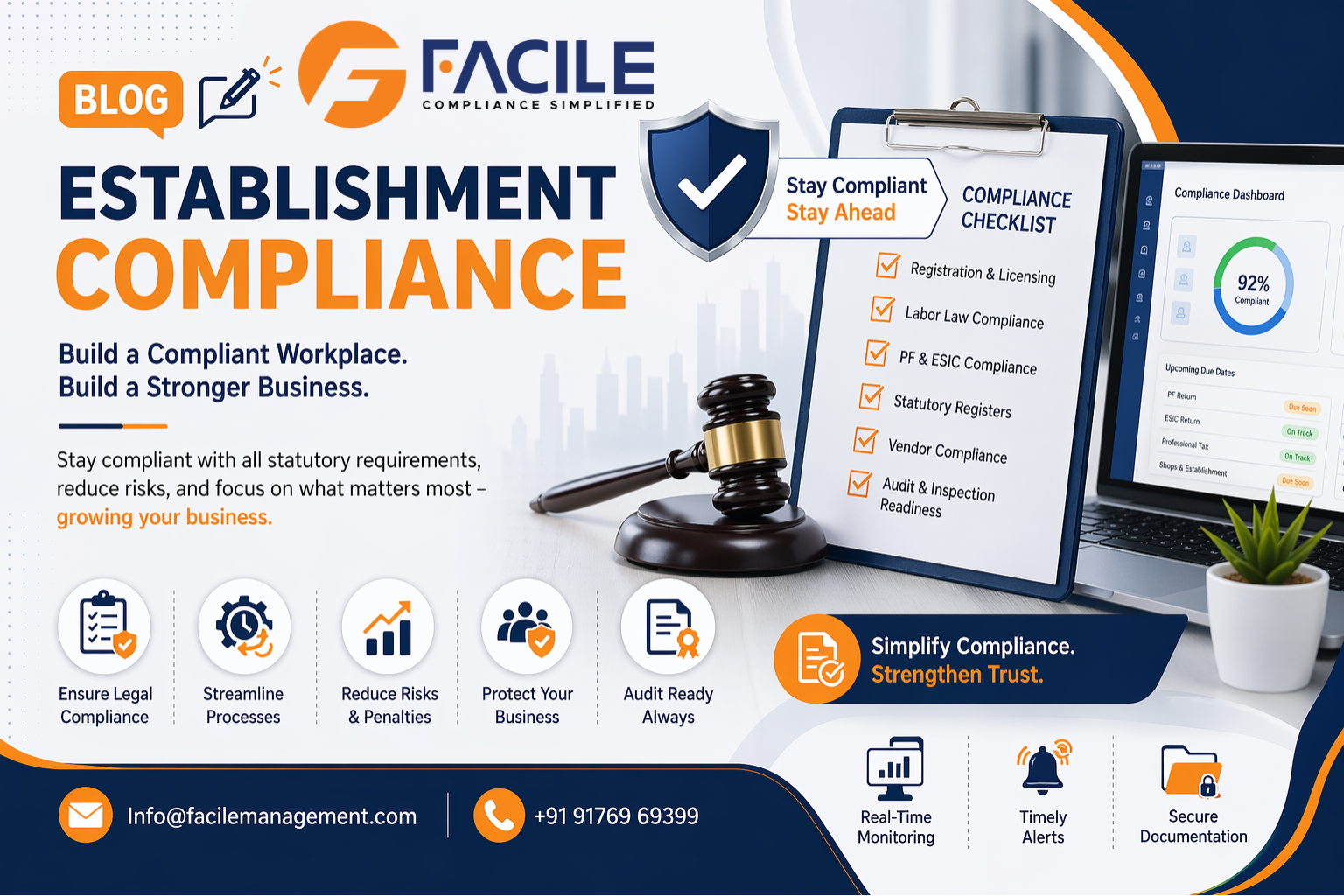
In today’s highly regulated business environment, establishment compliance is not just a legal requirement—it is a fundamental pillar of operational integrity and long-term sustainability. Every organization, whether small, medium, or large, must comply with a wide range of statutory regulations governing labor laws, workplace safety, employee welfare, and business operations.
Failure to comply can result in:
On the other hand, strong compliance practices build trust, enhance credibility, and ensure smooth business operations.
With evolving regulations and multi-state complexities, businesses are increasingly turning to structured compliance solutions like those offered by Facile Management Services to manage establishment compliance efficiently.
Establishment compliance refers to the process of adhering to all legal and statutory requirements applicable to a business establishment. These regulations vary depending on:
Every business must obtain necessary registrations before commencing operations.
These licenses must be:
Labor laws ensure employee welfare and fair working conditions.
Organizations must ensure contributions toward employee benefits.
Maintaining statutory records is mandatory.
Organizations are responsible for ensuring their vendors comply with applicable laws.
Authorities may conduct inspections at any time.
Businesses must:
India has multiple central and state laws, making compliance highly complex.
Laws and rules are constantly updated, requiring continuous monitoring.
Many organizations still rely on:
Different states have different rules, increasing complexity.
Tracking vendor compliance manually is difficult and risky.
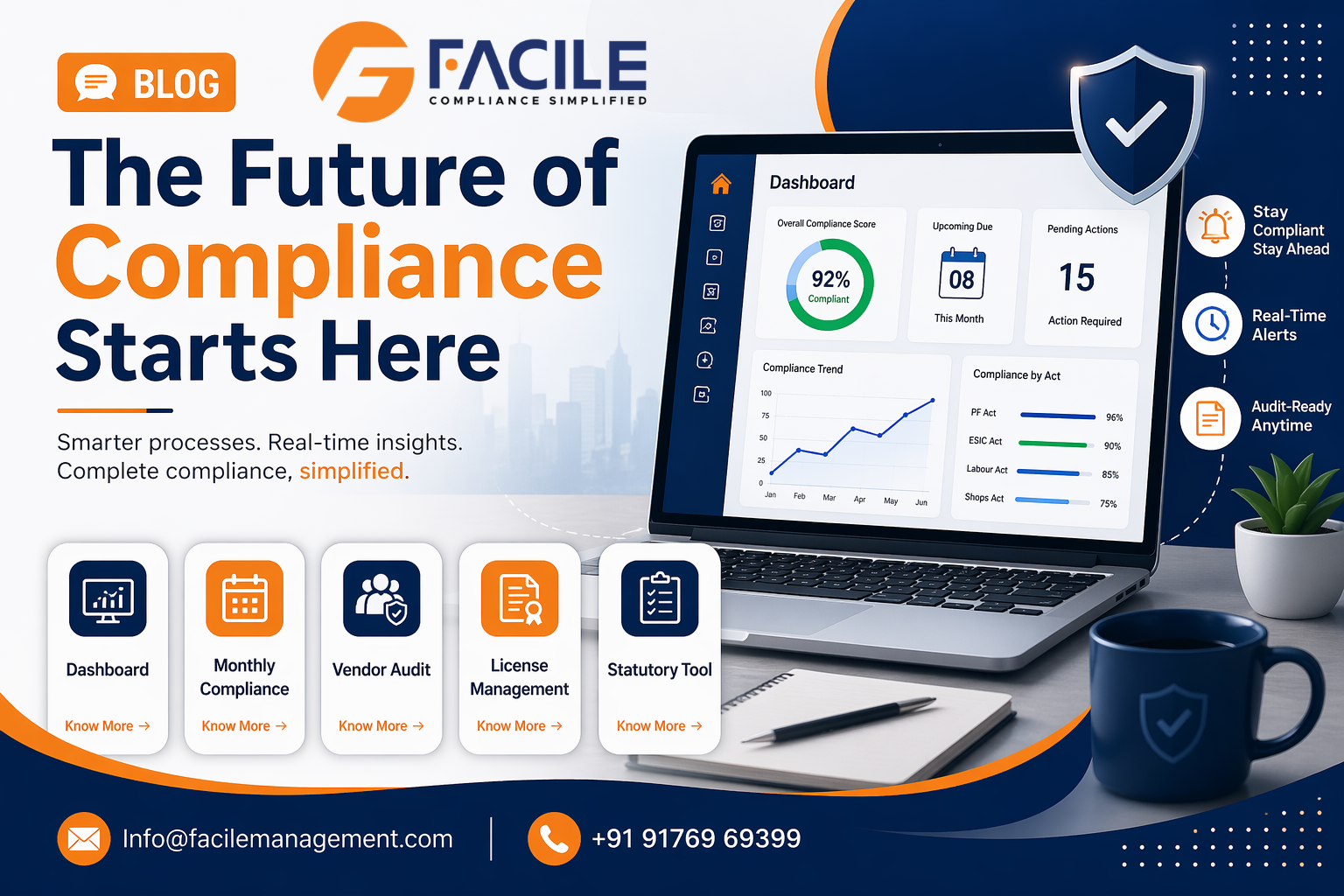
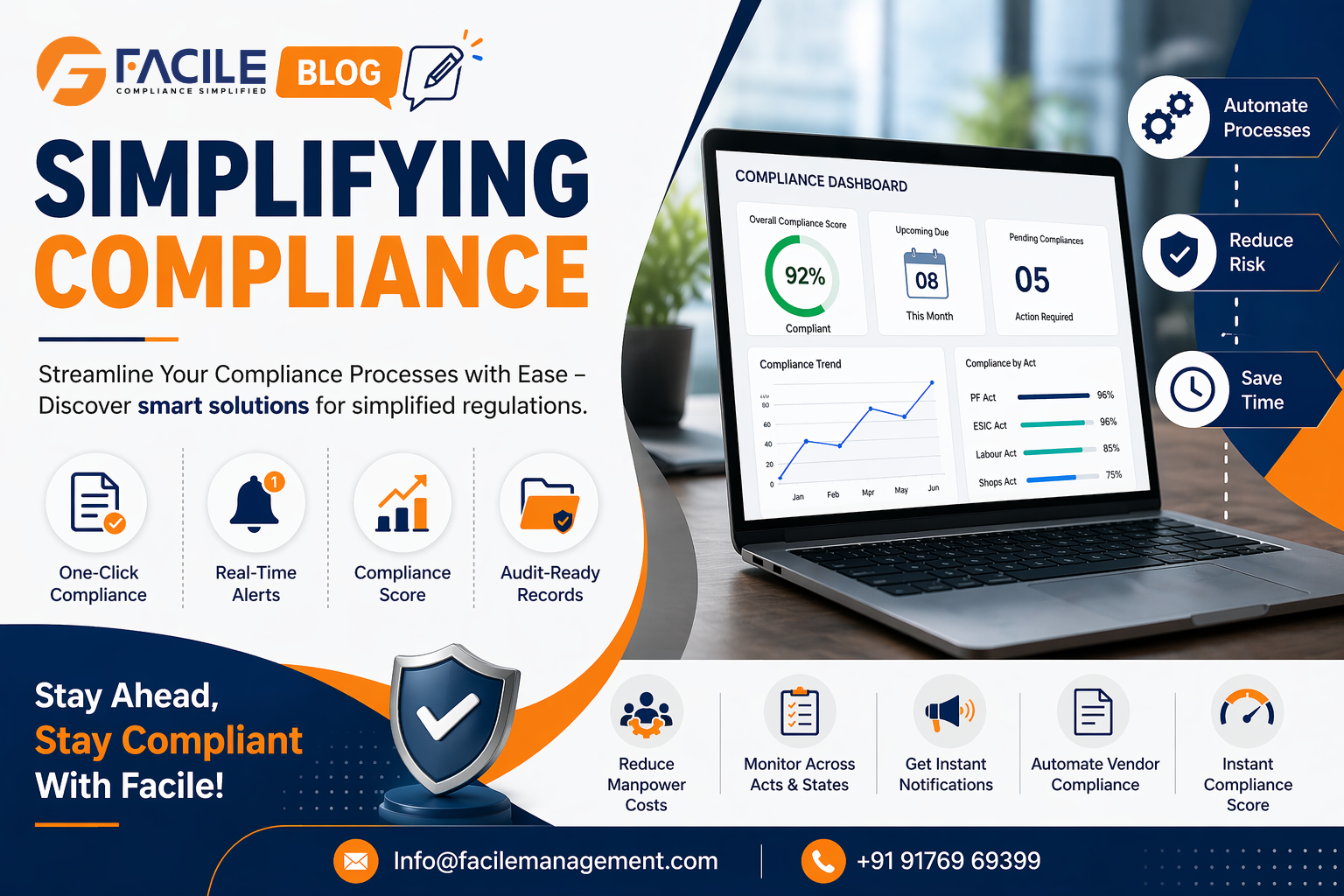
Technology-driven platforms are transforming compliance management.
Automation plays a crucial role in:
Eliminates manual mistakes and ensures accuracy.
Automates repetitive tasks like:
Allows teams to focus on strategic tasks rather than routine compliance.
Provides real-time insights into compliance status.
Ensures adherence to laws and avoids penalties.
Streamlines processes and reduces workload.
Ensures fair treatment and welfare of employees.
Builds credibility with stakeholders and authorities.
Maintains proper records for inspections and audits.
Keep all documents accurate and up to date.
Stay informed about new laws and amendments.
Adopt technology to streamline compliance processes.
Identify gaps and correct them proactively.
Ensure staff understands compliance requirements.
The future of compliance is digital.
Organizations adopting these technologies gain a competitive edge.
As referenced from
👉 https://www.facilemanagement.com/establishment-compliance
Facile Management Services provides comprehensive establishment compliance solutions that include:
From registration to filing and reporting.
Handles complex regulatory requirements across locations.
Generate statutory registers instantly.
Track and manage vendor compliance efficiently.
Ensure readiness for inspections and audits.
Managing compliance internally can be overwhelming.
A professional partner offers:
Establishment compliance is not just about avoiding penalties—it’s about building a strong, sustainable business.
By adopting modern compliance solutions and best practices, organizations can:
The future of business belongs to organizations that prioritize compliance.
It refers to adherence to all legal and statutory requirements applicable to a business establishment.
It ensures legal protection, smooth operations, and improved business credibility.
Registration, labor laws, PF & ESIC, statutory registers, vendor compliance, and audits.
It may face penalties, legal action, and reputational damage.
By using automated compliance systems and following best practices.
It involves ensuring that third-party vendors adhere to statutory requirements.
It reduces errors, saves time, and improves efficiency.
Official records required by law, such as wage and attendance registers.
Yes, state laws vary, making compliance more complex.
Regular audits should be conducted to identify and fix gaps.
Yes, with the help of digital tools and professional services.
Being prepared with proper documentation for inspections.
It ensures fair wages, benefits, and safe working conditions.
Technology automates processes and provides real-time insights.
You can explore services from Facile Management Services.


Facile Management Services (OPC) Private Limited is committed to delivering seamlessly integrated HR and compliance solutions designed for the evolving